When you work in SEO, probably the most common question is: "What position is this keyword at?" Yet not everyone understands what that number really means, why it keeps moving up and down, and what to do — other than panic — when it drops. This article explains keyword rankings from the basics through to reading fluctuations and the process for handling a decline.
What is a keyword ranking?
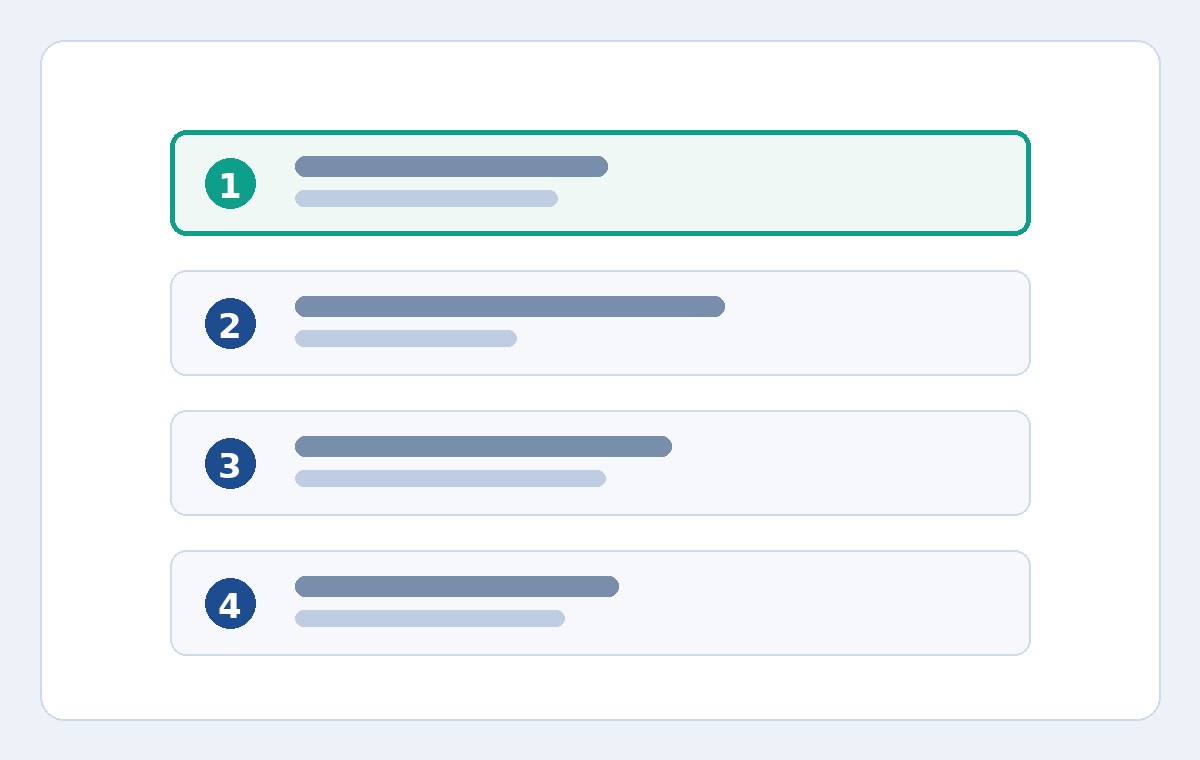
A keyword ranking (also called position) is where one of your web pages appears in Google's organic search results when a user types a specific keyword. Position 1 means your page tops the organic list (ads do not count); position 10 is usually the last result on the first page; position 11 and beyond means page two — where very few users ever click.
A few distinctions are worth making clear:
- A ranking belongs to one specific page (URL) for one specific keyword — for the same keyword, Google may rank your page A today and your page B at another time.
- Rankings are not fixed: they change with the searcher's location, device (mobile or desktop), the time of the search, and Google's own experiments.
- A ranking is different from traffic: a high position on a rarely searched keyword can be worth less than a lower position on a heavily searched one.
Why rankings matter — but are not everything
The higher the position, the greater the chance of being clicked — especially for the top three spots. That makes rankings the fastest indicator of whether your SEO efforts are heading in the right direction. However, do not turn them into your only goal: a successful SEO campaign ultimately has to produce customers, orders, or enquiries. Treat rankings as a "thermometer" for health, and combine them with traffic and conversion data from Google Analytics and Search Console for the full picture.
How to read ranking fluctuations correctly
Small day-to-day movement is normal
Rankings drifting up or down by 1–5 positions over a few days is extremely common, even when you change nothing. The cause may be competitors updating content, Google testing a new ordering, or data being collected from different servers. So never make decisions based on a single day. Look at 7-day and 30-day windows instead: if the overall trend is still upward or flat, everything is fine.
Distinguish "noise" from a real problem
- Noise: a few keywords dip slightly and recover within days; the project as a whole barely changes.
- A real problem: many keywords drop sharply in the same period, or a flagship keyword falls out of the top 10 or top 30 and does not recover after 1–2 weeks. That is when serious investigation is needed.
To tell these two cases apart, you absolutely need ranking history recorded on a regular basis. If you only check sporadically, you have no reference point to say what today's drop is measured against. That is why the rank tracking guides on the Keyword.help blog always emphasize continuity of data.
Track the ranking page, not just the number
One detail many people miss: a position number is meaningless unless you also know which page holds it. Google sometimes swaps the ranking page — your category page ranks this week, a blog post ranks next week — while the position barely changes. If the "wrong" page is ranking, clicks may land on content that does not convert, and optimizing the page you intended to rank will have no effect. Good tracking therefore records the ranking URL alongside every position, and a sudden page swap is treated as a signal in its own right: it often points to overlapping content, unclear topical focus, or two pages competing for the same keyword. Fixing that internal competition is frequently what restores a stable, higher ranking.
When you drop, check things in this order
1. Check technical issues first
Is the page still accessible? Has it been accidentally blocked from indexing (a noindex tag or robots.txt) after a site change? Has the page speed dropped noticeably? Many "mysterious ranking drops" actually start with an unintentional technical change, such as changing a URL and forgetting the 301 redirect.
2. Check whether Google just rolled out an algorithm update
If many websites in your industry moved at the same time, it is likely a Google update. In that case, do not rush to change your site — wait a few days for rankings to settle, then assess the real impact.
3. Compare with the competitors who overtook you
Open the pages now ranking above you and ask: is their content more complete, fresher, or a better match for search intent? Have they added richer formats, such as comparison tables, videos, or FAQs? A drop is often not because you got worse, but because competitors got better.
4. Audit your own content
Is the article out of date (old prices, figures, or instructions)? Is another page on the same website competing for the same keyword (keyword cannibalization)? Does the content still match what users actually want when they type that keyword? Updating, expanding, and refreshing old content is usually the most effective and safest way to recover a ranking.
5. Be patient and measure again
After you make changes, Google needs time to recrawl and re-evaluate. Keep tracking for at least 2–4 weeks before concluding whether a fix worked. Changing things every day on gut feeling means you will never know which change actually made the difference.
Conclusion
Understanding keyword rankings is not just about knowing a number — it is about reading trends, separating noise from real problems, and having a calm process for when rankings fall. All of that rests on regular, reliable tracking data. You can start building that habit by automatically tracking your most important keyword group — see the options at the pricing page to pick a plan that fits the size of your website.