Most websites choose new article topics by feel: a topic looks interesting, so they write it; a competitor wrote about something, so they follow. That approach is not wrong, but it ignores a source of suggestions already in your hands: the ranking data table. The table does not only show which keywords are rising or falling; it also shows which topics Google already considers your website relevant for, which topics are close to page one, and which topics are completely empty. Read the table this way, and you will write fewer articles, with each one having a better chance of ranking well.
Find topics in the keyword group sitting at positions eleven to thirty
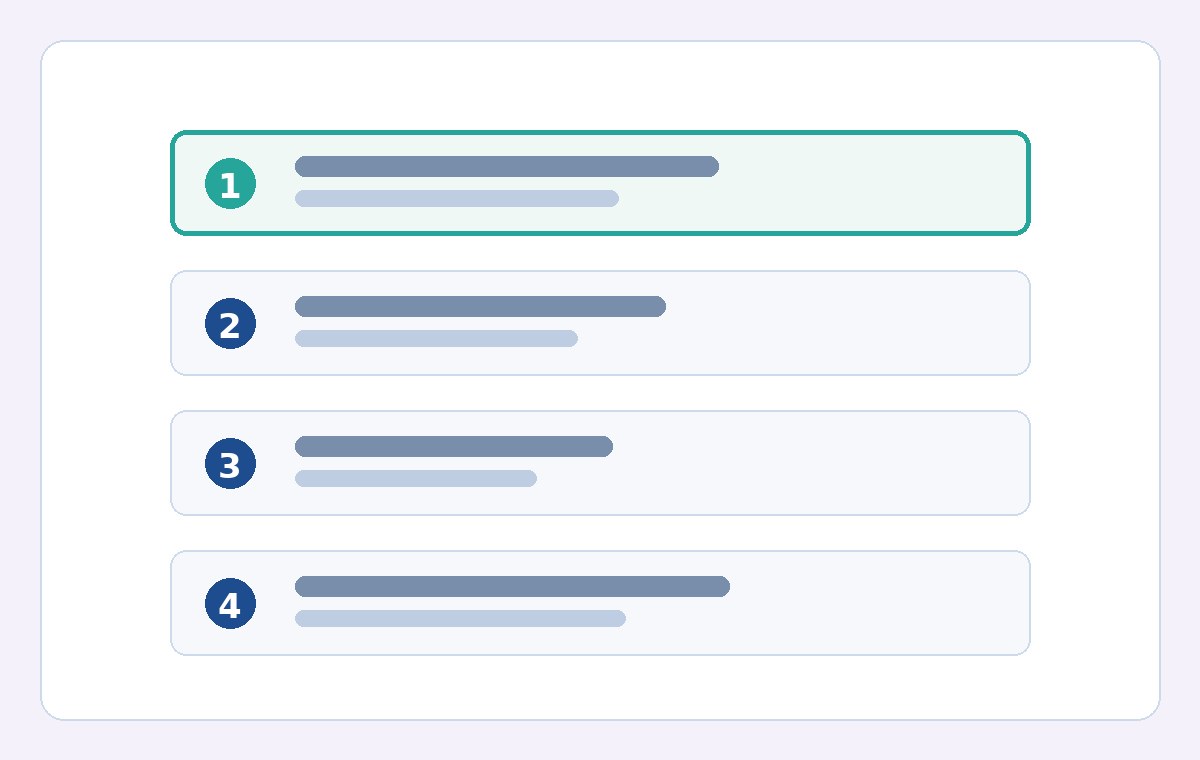
The strongest signal sits in the group of keywords at positions eleven to thirty: Google has already recognized your website as relevant, and only a good enough article is missing to push it onto page one. List the keywords in this group by topic: if five keywords revolve around one question you have no dedicated article for, that is exactly the topic your next article should cover. The new article should not repeat the content of the page currently ranking; it should answer directly the question that keyword group is asking, more deeply and more clearly than the current page.
For example, if your website ranks around position fifteen for keywords about reading ranking charts, but has no article explaining each line of the chart in detail, the new article should do exactly that. After publishing, add the new article to a tracking project and watch it climb over the following weeks; if it overtakes the old page and takes the ranking spot, you have turned ranking data into a useful article. If you want more on reading ranking trend charts, you can find it in the Keyword.help blog.
Find topics in surprising secondary keywords
The second signal sits in secondary keywords your pages rank for by accident: keywords you never targeted, but Google still shows the page for at position twenty or thirty. Each such keyword is a hint that searchers are asking a related question your website has not answered directly. Group these secondary keywords by topic: if three of them ask about one angle you have never written about, that is a new topic with existing demand and some relevance already established.
This works because you are not starting from zero: Google already knows your website is relevant to that topic, so the new article starts from a better position than a completely unfamiliar topic. By contrast, if you write about a topic your website has never ranked for in any related keyword, the article will take much longer to be recognized by Google. Prioritizing topics that ranking data has already proven your website relevant for is the fastest way to see results.
Find gaps in topics competitors hold that you do not have
The third signal comes from comparison: tracking a competitor's rankings shows which topics they rank for that you never appear in. Not every competitor topic is worth following — many may have nothing to do with your services or customers — but when a topic is relevant to your customers, the competitor holds rankings for it, and you are completely absent, that is a gap worth filling.
The selection method is to ask three questions for each gap: does this topic connect to a service or product you sell, do your customers actually search for it, and can you write it more deeply or from a more original angle than the article currently ranking? Only when all three answers are yes should it go on the writing calendar. Filling gaps without these three questions only produces articles that drift away from the website's focus. On Keyword.help, you track rankings by country and device down to the Top 30, so you can set up a separate project for a competitor's domain to see which topics they hold rankings for, then compare that with your own topic list.
Turn the three signals into a writing calendar
Once you have three lists — near-win topics, topics from secondary keywords, and topics from competitor gaps — the next step is to arrange them into a writing calendar in priority order. Near-win topics go first, because they can rank fastest and show results soonest. Secondary-keyword topics come next, because they extend the website's coverage into related questions. Competitor-gap topics come last, because they usually take the most effort to overtake the article already ranking.
A realistic calendar is two to four articles per month in exactly this order, instead of ten articles written on impulse with none of them ranking. After each article is published, record the publication date and track the related keyword group for four to six weeks: an article that climbs into the Top 10 proves this topic-selection method is working, while one that stands still signals a need to check whether the article really answers the question. If you are reorganizing your writing calendar around ranking data, you can start at the sign-up page and set up a tracking project for each topic group to watch progress week by week.
Common mistakes when choosing topics from ranking data
The first mistake is looking only at a page's main keyword and ignoring secondary keywords. Secondary keywords hide the most topic suggestions, because they show what searchers are asking that you have not answered. The second mistake is writing a new article for a topic while an old page still ranks for the same topic, creating two pages competing for one keyword. Before writing a new article, check whether any page of yours already holds rankings for that topic; if one does, update the old page instead of writing a new one.
The third mistake is chasing every competitor gap without filtering through the three questions above. A website cannot write about everything its competitors write about; strength lies in choosing the gaps that connect to your own customers, not in the number of articles.
Conclusion
Ranking data is a ready-made topic map: the keyword group at positions eleven to thirty points to near-win topics, surprising secondary keywords point to unanswered questions, and competitor rankings point to gaps still empty. Turn these three signals into a writing calendar in priority order — near-wins first, secondary keywords next, competitor gaps last — and track each article's results over four to six weeks, and you will write fewer articles with each one having a better chance of ranking well.