Updating an old article is one of the most efficient SEO moves there is: instead of writing from scratch, you fix an article that already ranks, add fresh information, clarify what is missing, and wait for Google to reassess it. But many people finish an update and never learn whether it worked. They check rankings once after a few days, see no change, and conclude the update was useless — or see a one-position rise and celebrate, without knowing it was just normal fluctuation. To know what an update really did, you need a baseline recorded before you edit and a clear reading schedule afterward.
Record the baseline before touching the article
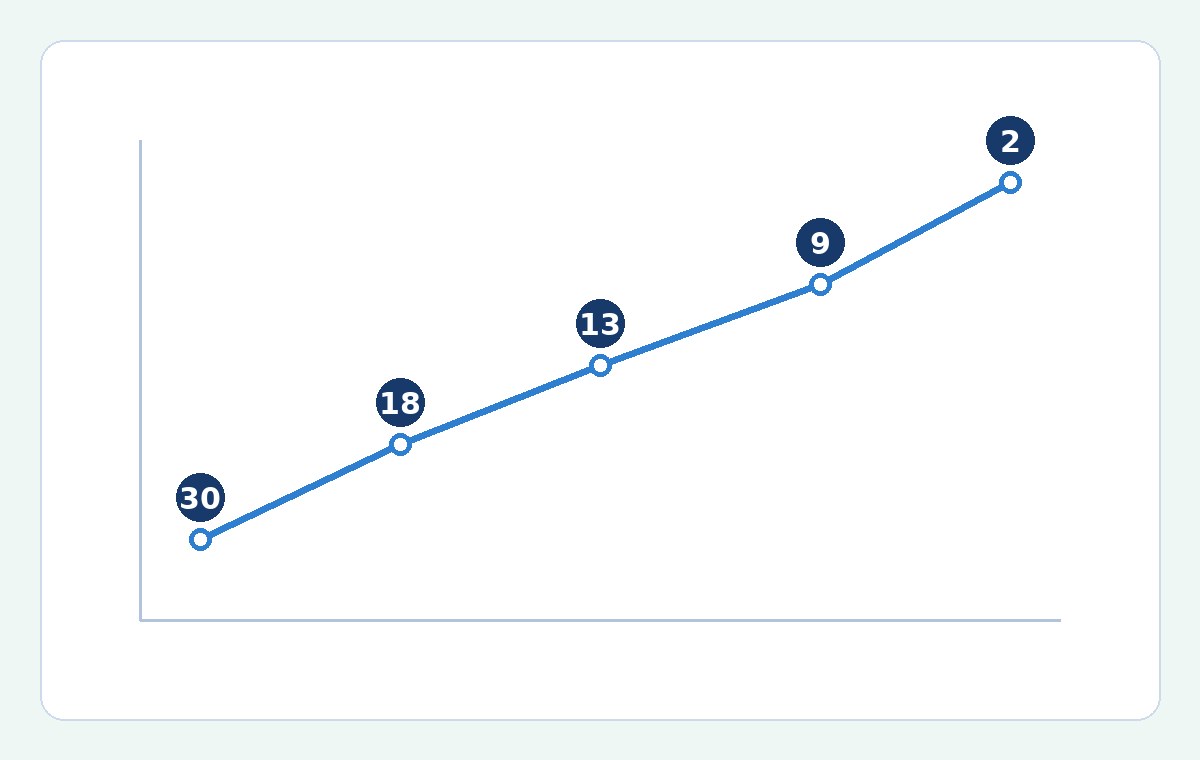
The most important step is also the one most often skipped: before changing anything, record the article's current position for each main keyword it ranks for, together with the date. Without this baseline, every later comparison is guesswork: you will not know whether a two-position rise came from your update or from a competitor slipping. The baseline should include not only the position number, but also which landing page is ranking for that keyword, because after an update Google sometimes picks a different page of yours to rank instead of the one you just edited.
Alongside the ranking baseline, write a short note of what you changed: which section you added, which paragraph you removed, how you changed the title, and what images or internal links you added. A good update usually combines many small changes, and when rankings move afterward, this change list helps you guess which part had the effect. If you want a refresher on reading ranking trend charts before you start, you can find more in the Keyword.help blog.
Do not judge in the first week
After an article is updated, Google needs time to recrawl the new content and reassess the page's position. In the first few days, rankings can swing sharply in both directions without saying anything about the quality of the edit: the page may drop a few positions and then recover, or rise a few positions and fall back to where it was. So the first week after an update should only be used to check whether the page has been recrawled, not to judge whether the edit succeeded or failed.
A sensible reading schedule is: a quick check after one week to see whether the page has been updated in the index, a serious read after two to four weeks once rankings start to settle, and a conclusion after about a month. For highly competitive keywords, it can take six weeks before the trend is clear. Patience here is not passivity: while you wait, you can still watch whether the page is ranking for any new keywords, since that is often an early sign that Google has picked up the new content.
Read three signals at once, not just position
Position is the most important signal, but it is not the only one. When reading results after an update, look at two more signals. First, the number of keywords the page ranks for inside the Top 30: a good update often helps the page appear for more related keywords, even if the main keyword has not moved. Second, the landing page that is ranking: if, after the update, the page you edited has taken the ranking spot back from another page of your own, that is a good sign, because search intent has been consolidated onto the right page.
There are also two warning signs to watch for. One is a ranking drop that does not recover after three weeks, especially when the main keyword falls out of the Top 30 — the update may have diluted the main topic or shifted the content away from the original search intent. The other is losing rankings for secondary keywords the page used to hold, even while the main keyword stays put. Both cases are worth reopening the edit and comparing it with the pre-update version, rather than rushing into another round of edits. On Keyword.help, you track rankings by country and device down to the Top 30, with automatic daily checks you enable per project on a paid plan, so the trend line after an update stays continuous and easy to match against the edit date.
When to edit again, and when to stop
Not every update needs a follow-up edit. If after a month the main keyword has improved and the number of secondary keywords has grown, the update has done its job; move on to the next article instead of touching a page that is rising. If rankings are unchanged after a month but have not fallen either, the content may already be good enough while competitors are also getting stronger; in that case, check whether the article is missing an angle that the results above it already cover, before deciding whether to edit further.
Edit again only when there is clear evidence: a drop lasting three weeks, a whole group of secondary keywords lost, or the ranking landing page switching to a different page. And when you do edit again, change one group of things at a time instead of everything at once, so the next reading can still tell you which change produced the result. If you are reorganizing your schedule for updating old content, you can start at the sign-up page and add the articles due for updates to a tracking project, so you have a clear ranking baseline before each edit.
Common mistakes when tracking after an update
The second mistake is comparing today's position with yesterday's instead of with the pre-edit baseline. Day-to-day fluctuation is normal; only a comparison against the original baseline shows what the update achieved. The third mistake is forgetting to check device: an updated article can rise on desktop but fall on mobile, or the other way around, because the reading experience differs between the two. Always read rankings on both devices before concluding.
Conclusion
Tracking rankings after updating old content is a three-step process: record the ranking baseline and the list of changes before editing, wait long enough for Google to reassess before judging, and read three signals together — the main keyword's position, the number of secondary keywords inside the Top 30, and the landing page that is ranking. Done this way, every update leaves a clear lesson: which change helped rankings rise, which change had no effect, and what to fix first next time.